
Mother & child · 6 min read
Diarrhoea in children: win the fight against dehydration early
The biggest early risk is lost fluid. Keep feeding, use oral rehydration solution correctly and know the signs that mean your child needs care quickly.
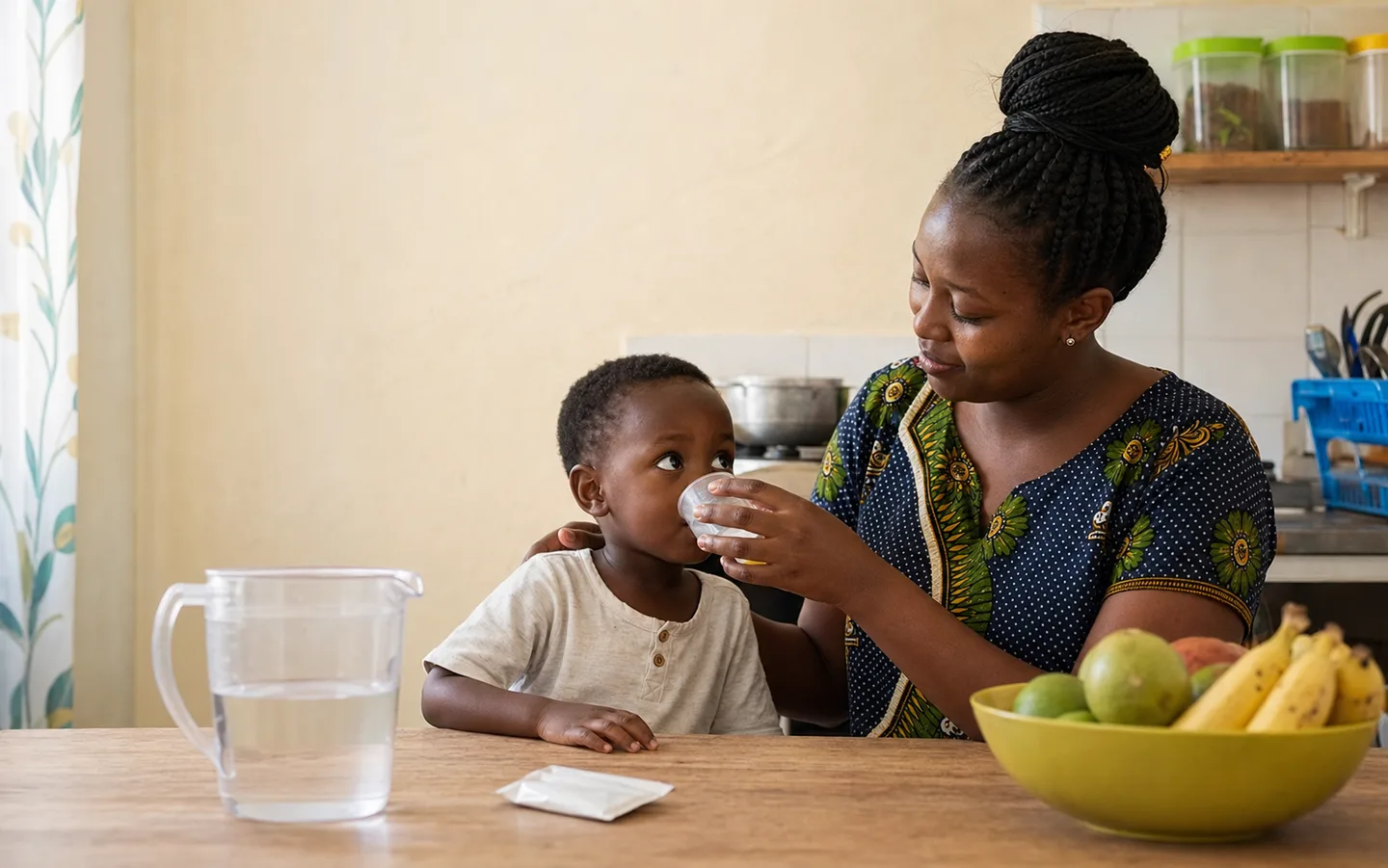
Keep breastfeeding and offer properly prepared oral rehydration solution. Get prompt care for blood in stool, persistent vomiting, poor drinking, very little urine, sunken eyes or unusual sleepiness.
Replace what the body is losing
Diarrhoea carries water and salts out of the body. Children can become dehydrated faster than adults, especially when vomiting is also present. Use oral rehydration solution mixed exactly as the packet directs. Offer small, frequent sips with patience; a spoon can work when a cup feels like too much.
Keep breastfeeding and feeding
Continue breast milk as often as the child wants. Offer normal nutritious food in small amounts once they can manage it. Soda, juice and very sugary drinks are not a substitute for oral rehydration solution and can make diarrhoea worse. A clinician can advise whether zinc is appropriate for your child.
Avoid the medicine cupboard experiment
Do not give leftover antibiotics or adult anti-diarrhoea medicine to a child without clinical advice. Many cases do not need antibiotics, and some medicines can be harmful. The treatment depends on the child’s age, hydration and the likely cause.
Protect the rest of the family
Wash hands with soap after changing nappies or helping a child use the toilet, and before preparing food. Use safe drinking water and clean utensils. Keep the child’s towel separate while they are unwell.
Know the dehydration signs
Go urgently if the child cannot drink, is very sleepy, has sunken eyes, drinks desperately, passes very little urine, has blood in the stool, vomits everything or has severe abdominal pain. A young baby who looks unwell should be assessed early.
Health information sources
These sources support the general information on this page.
Updated 27 July 2026. Penda adapts public-health guidance for a Kenyan patient audience; this page does not replace a personal consultation.