
Dental care · 5 min read
What happens during a professional tooth cleaning?
If the last cleaning was long ago—or you have never had one—here is what the dental team is looking for and what the visit feels like.
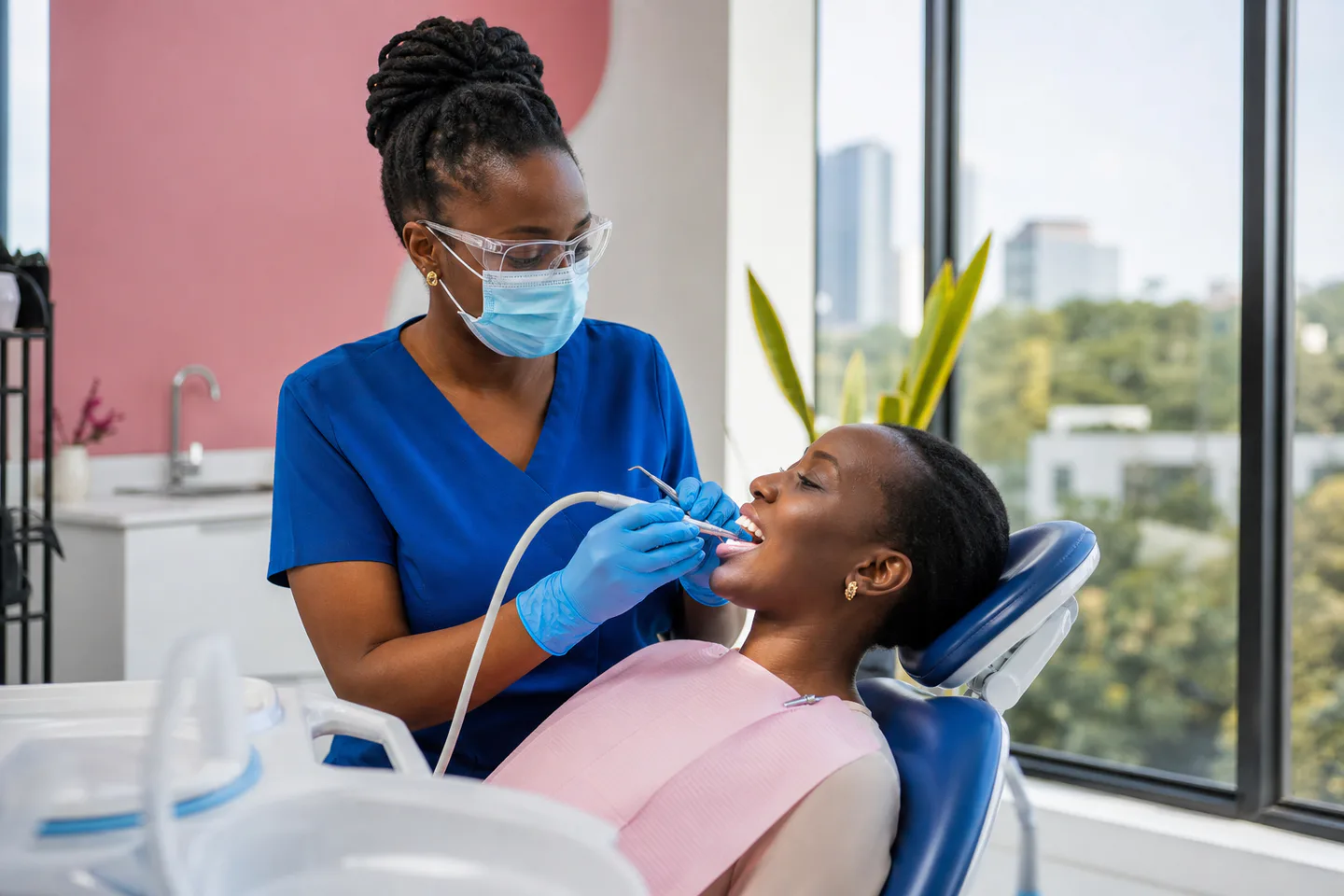
A professional cleaning removes hardened plaque that brushing cannot remove. The dental professional also checks your gums and teeth, explains any problem areas and recommends a follow-up interval based on your needs.
Cleaning is more than making teeth look brighter
Plaque is a sticky film that forms on teeth. When it hardens into tartar, a toothbrush cannot remove it. Tartar can irritate the gums and contribute to gum disease. A professional cleaning removes these deposits and gives the dental team a close look at areas that may be difficult to clean at home.
The visit begins with a look around
Tell the dental professional about pain, bleeding gums, sensitivity, medicines and any previous dental work. They will examine the teeth and gums and may measure gum pockets or recommend an X-ray if there is a clinical reason. You can ask what they are seeing before the cleaning begins.
You may hear scraping and feel vibration
Hand instruments or an ultrasonic scaler are used to remove deposits around the teeth and gumline. You may feel pressure, water spray or vibration. Sensitive teeth and inflamed gums can make some areas uncomfortable, so speak up. The team can pause, adjust the approach and explain what will help.
There is no one perfect schedule for everyone
Some people need more frequent cleaning because of gum disease, diabetes, smoking, braces or faster tartar build-up. Others may need it less often. Ask the dental professional to recommend a schedule based on your mouth—not a package sold to everyone.
The work continues at home
Cleaning gives you a fresh start, but daily brushing with fluoride toothpaste and cleaning between the teeth help keep plaque from building up again. If gums bleed, do not abandon the area; ask for advice on a gentler, more effective technique.
Common questions
Does a tooth cleaning hurt?
You may feel pressure, vibration or sensitivity. Tell the dental professional if you are uncomfortable so they can adjust the approach.
How often should I have my teeth cleaned?
The best interval depends on your gums, teeth and risk factors. Ask the dental professional for a recommendation based on your needs.
Health information sources
These sources support the general information on this page.
Updated 27 July 2026. Penda adapts public-health guidance for a Kenyan patient audience; this page does not replace a personal consultation.